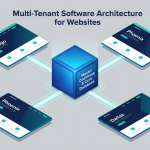
Building a digital presence for one location is simple. But when you need to know how to build a scalable website for a franchise system, the complexity grows exponentially. You aren’t just building a website; you are building a distribution engine that must serve the interests of the corporate brand, the local franchisee, and the end user simultaneously.
If your current setup requires a developer every time you add a new location, your system is not scalable. To truly scale, you need a framework that treats each new location as a “node” in a larger network rather than a standalone project.
The Foundation: Multi-Tenant Architecture
The most critical step in how to build a scalable website for a franchise system is moving away from independent WordPress installs and toward a multi-tenant architecture.
In a multi-tenant model, there is one “Master” codebase. When a new franchisee joins, the system “provisions” a new instance. This ensures that:
- Security Updates happen once and apply to everyone.
- Feature Launches (like a new online ordering tool) are pushed to the entire network instantly.
- Brand Integrity is hard-coded into the master template.
Step 1: Centralized Governance with Local Autonomy
A major roadblock when learning how to build a scalable website for a franchise system is the “tug-of-war” between corporate and local owners.
- Corporate Needs: To ensure that the logo, brand colors, and core value propositions never change.
- Franchisee Needs: To highlight their local team, community involvement, and specific location hours.
The Solution: Content Zones. Your CMS should allow “Locked Zones” for corporate and “Editable Zones” for franchisees. This allows for a unified brand voice while giving the local owner the autonomy they need to rank in their specific market.

Step 2: Strategic Lead Routing
A scalable website for a franchise system must be a lead-generation machine. If a customer in Phoenix fills out a form, that lead should never land in a generic “info@brand.com” inbox.
Using API integrations, your website should automatically route leads based on the user’s zip code or the specific location page they were visiting. This ensures the franchisee receives the lead in real-time, increasing conversion rates.
Expert Implementation: For brands looking to bypass the technical debt of building this from scratch, utilizing a scalable franchise platform like KynectLocal allows you to deploy this architecture in weeks rather than months.
Step 3: Local SEO at Scale
To rank in the “Local Map Pack,” every location needs its own footprint. When you build a scalable website for a franchise system, you must automate the “technical” SEO:
- Automated Schema Markup: Every page should automatically generate
LocalBusinessJSON-LD. - Unique Local Content: Each page must have a section for “Local Story” or “Local News” to avoid “Duplicate Content” penalties from Google.
The Scale Checklist: Is Your System Ready?
To confirm you have successfully built a scalable website for a franchise system, ask these three questions:
- The 500 Test: Can I add 500 locations tomorrow without my hosting costs or management hours spiraling out of control?
- The Brand Test: Can a franchisee accidentally change the brand font to Comic Sans? (If yes, your governance is too weak).
- The Lead Test: Does every lead go directly to the person responsible for closing it?.